
+86 189 1837 7232
sales@lycotek.com

PTFE cup seals are single-piece PTFE lip seals that rely on PTFE's memory behaviour — no springs or energizers — to seal piston and rod grooves in pneumatic and low-pressure hydraulic systems.
The Lycotek range covers six models — L-cup (MLP, MLR), U-cup (MUP, MUR), guided block (MGP, MGR) — from -40 °C to +220 °C, up to 15 m/s (reciprocating) / 1 m/s (rotary), below 20 bar, for compressors, pneumatic valves, food processing and paint application.
Conventional elastomer-only seals lose lip contact as temperature rises, swell in aggressive media, and their rubbery friction causes stick-slip and high break-away force. PTFE cup seals avoid all of this: they are single-piece seals that rely on PTFE's memory behaviour to stay in contact — no energizers, no springs.
The lip keeps sealing contact through PTFE's inherent memory behaviour, not through elastomer energizers or metal springs. This keeps the design single-piece and compact, with the seal force stable over the full -40 °C to +220 °C range.
Friction stays extremely low and constant across a wide temperature range, and no stick-slip occurs even at low sliding speeds. Break-away force remains minimal even after long standstill — ideal for valves, solenoid valves and metering equipment.
Runs reliably without lubrication, which suits compressors, vacuum pumps and pneumatic cylinders where oil-free operation or intermittent lubrication is common.
High resistance to chemicals and heat, with no volume change from expansion or contraction — sealing geometry stays true across the full -40 °C to +220 °C range and in aggressive media found in food-processing and paint-application equipment.
One-piece moulding keeps the seal compact and cost-effective, and special sizes are available on request. The range covers piston and rod installation in L-cup, U-cup and guided-block profiles.
All six models share the same pressure, speed and temperature limits — what sets them apart is profile, mounting direction and rotary-service rating. Use the table below to match each model to your application type.
|
Rod Seal |
Bore Seal |
Application Type * |
Product Type |
Operating Limits |
Features |
|
MUR U-cup |
MUP U-cup |
Reciprocating-A |
Piston seal |
Pressure < 20 bar |
· Suitable for open and half-open grooves |
|
|
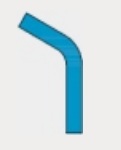 MLP MLPL-cup |
Reciprocating-A |
Piston seal |
Pressure < 20 bar |
· Compact design |
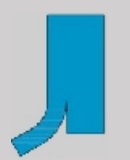 MGR MGRGuided block |
 MGP MGPGuided block |
Reciprocating-A |
Piston seal |
Pressure < 20 bar |
· Compact design |
* A = Excellent · B = Good · C = Conditional on operating conditions.
Notes:
The above data depend on seal type, material and operating conditions.
The above limits cannot all be reached simultaneously.
Other materials not listed can be selected for special operating conditions.
Compressors · Vacuum pumps · Pneumatic cylinders · Valves & solenoid valves · Food-processing equipment · Paint valves
Not sure which seal fits your application?
Send us your pressure, speed, temperature and media — our engineers will match the right profile and material.
Contact Our Engineers Right Now!⬇️⬇️⬇️
Empowering you to fully understand everything about us—start.


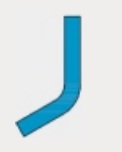 MLR
MLR