+86 189 1837 7232
sales@lycotek.com

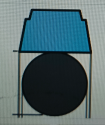
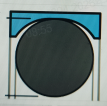
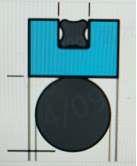
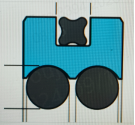
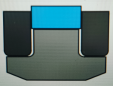
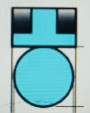
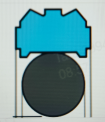
PTFE piston seals are low-friction, polymer-based sealing elements installed on the piston of hydraulic and pneumatic cylinders, typically comprising a PTFE seal ring energized by an elastomer O-ring or metal spring to isolate pressure chambers and prevent fluid leakage past the piston, while delivering smooth, stick-slip-free.
The Lycotek range pairs engineered polymer seal rings — PTFE or polyurethane — with elastomer or metal-spring energizers across ten series, delivering reliable sealing from −70 °C to +300 °C, at pressures up to 100 MPa and speeds up to 15 m/s, for bore diameters from 2 mm to 3,300 mm, in both reciprocating and rotary applications.
All ten Lycotek PTFE piston seal series are engineered around five core characteristics — from low-friction, stick-slip-free motion to extrusion-resistant, standardized-groove designs:
All Lycotek piston seal series deliver low friction and stick-slip-free motion for smooth, efficient, precisely controlled cylinder operation.
Abrasion-resistant sealing faces and high dimensional stability extend service life and reduce maintenance.
Robust seal geometry and optional integrated back-up rings permit larger hardware clearances and safe high-pressure operation.
PTFE-based sealing faces are compatible with a broad range of hydraulic fluids, chemicals and gases — mineral oil-based and flame-retardant hydraulic fluids, environmentally friendly bio-based fluids, phosphate ester, water, water-glycol and emulsions, air and gases — with chemical resistance further tailorable through energizer material selection, and media-separating capability (fluid/fluid, fluid/gas) available where duty demands it.
The ten Lycotek PTFE piston seal series below span the principal piston-sealing duty classes — from compact, light-duty delta profiles to spring-energized seals for extreme temperatures and back-up-ring versions rated to 100 MPa, in both reciprocating and rotary motion. The table summarises each series at a glance: construction, key technical data, and its most common applications.
|
Type |
Product Overview |
Technical Data |
Typical Applications |
|||
|
Temp |
Speed |
Pressure |
Size Ø |
|||
|
DET |
DET Double-Acting Piston Seal, universal type |
−45 °C to +200 °C (depending on O-ring material) |
up to 15 m/s |
up to 60 MPa |
up to 2,700 mm |
• Injection molding machines |
 DAS |
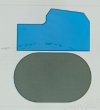
DAS Double-Acting Piston Seal, step-cut profile for heavy duty |
−45 °C to +200 °C |
up to 15 m/s, with reciprocating movements, frequency up to 5 Hz |
up to 60 MPa |
up to 2,700 mm |
• Mobile hydraulics |
|
DEC |
DEC Double-Acting Piston Seal, compact delta profile for light duty |
−45 °C to +200 °C (according to O-ring material) |
up to 15 m/s |
up to 35 MPa |
5 – 999.9 mm |
• Machine tools |
|
DQA |
DQA Double-Acting Piston Seal with X-ring energizers |
−45 °C to +200 °C (depending on O-ring and X-ring material) |
up to 2 m/s with reciprocating movements |
up to 50 MPa with mineral oil; |
15 – 462.9 mm (PQ52 463–700 mm not included) |
• Mobile hydraulics |
|
DQB |
DQB Double-Acting Piston Seal with X-ring energizers, low-friction version |
−30 °C to +200 °C |
up to 3 m/s with linear movements, frequency up to 3 Hz |
up to 60 MPa with mineral oil; |
25 – 700 mm |
• Mobile hydraulics |
|
DWT |
DWT Heavy-Duty Piston Seal for high pressure |
−45 °C to +135 °C |
1.5 m/s |
50 MPa (peak pressure up to 60 MPa) |
50 – 320 mm |
• Excavators |
|
DEBB |
DEBB Double-Acting Piston Seal with back-up rings for ultra-high pressure |
−45 °C to +200 °C |
up to 5 m/s |
up to 100 MPa |
20 – 2,700 mm |
for dynamic applications with higher pressures or larger gaps. |
|
SVP |
SVP Spring-Energized Piston Seal for extreme temperatures & low friction |
−70 °C to +300 °C |
reciprocating up to 15 m/s; rotating up to 1.3 m/s |
Max. dynamic 20 MPa; max. static 40 MPa (200 MPa with back-up ring) |
2 – 3,300 mm |
• Hydraulic components (cylinders, valves, pumps, etc.) |
|
RGP |
RGP Rotary / Oscillating Seal |
−45 °C to +200 °C (depending on O-ring material) |
Up to 2 m/s |
Up to 30 MPa |
up to 2,700 mm |
• Rotary distributors |
|
DEW |
DEW Double-Acting Piston Seal, polyurethane for wear & impact resistance |
−35 °C to +110 °C |
up to 0.5 m/s |
up to 25 MPa |
Groove identical to Glyd Ring type |
• Machine tools |
Notes:
The data above represent maximum values and are not to be used simultaneously. For example, the maximum pressure depends on the material type, temperature, and clearance, while the temperature range is also dependent on the medium type.
Empowering you to fully understand everything about us—start.